
Dentures
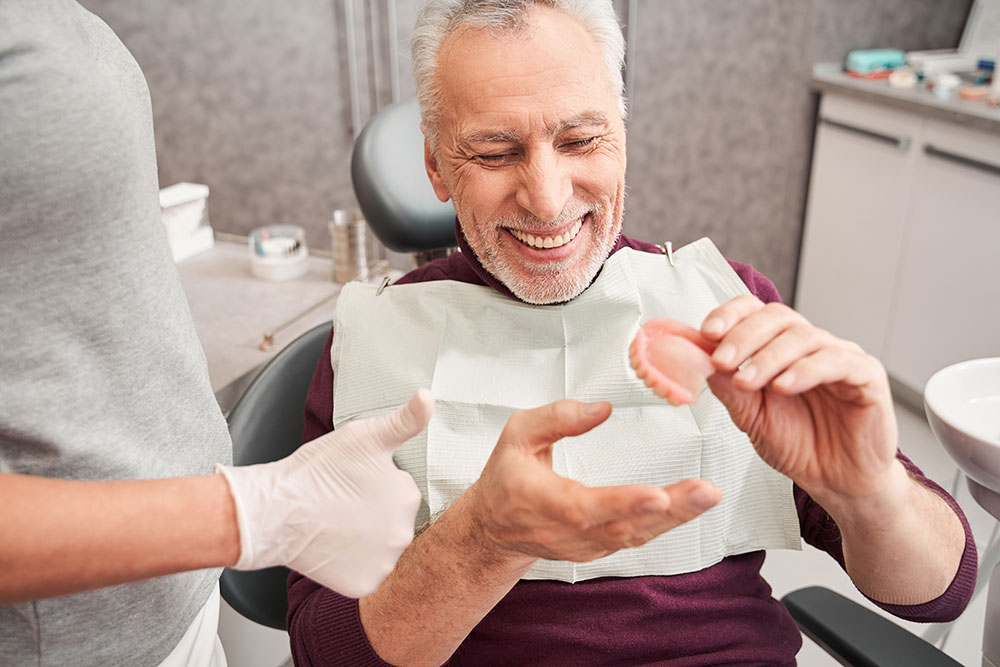
Losing permanent teeth can feel overwhelming, but it does not have to mean the end of a confident, functional smile. At Pike & Valega, DDS in Poolesville, MD, we offer custom denture solutions designed to help you eat, speak, and smile comfortably. Whether you are missing a few teeth or a full arch, our experienced dental team will help you find the right fit for your lifestyle and oral health needs.
Dentures are a time-tested, removable dental appliance consisting of prosthetic teeth set into a gum-colored base. They are precisely custom-made to match your anatomy, giving you a natural-looking result that complements your facial structure. Modern dentures are more comfortable and lifelike than ever before, and at Pike & Valega, DDS, we use advanced digital imaging technology to ensure an accurate, comfortable fit from day one.
Benefits of Dentures
Replacing missing teeth is about far more than appearance. Left untreated, gaps from missing teeth can lead to bone loss, shifting of remaining teeth, difficulty chewing, and changes in facial structure. Dentures address all of these concerns while offering meaningful quality-of-life improvements:
- Restore chewing function so you can comfortably enjoy a wider variety of foods
- Improve speech clarity, which is often affected when teeth are missing
- Prevent bone loss by stimulating the jaw and maintaining facial volume
- Support surrounding teeth by preventing remaining natural teeth from drifting out of alignment
- Enhance your appearance with a full, natural-looking smile that can be customized to your preferences
- Boost confidence and allow you to engage socially without self-consciousness
- Customizable aesthetics, you choose the size, shape, and shade of your artificial teeth for a smile that feels yours authentically
Types of Dentures We Offer
Every patient’s situation is unique, which is why Pike & Valega, DDS, offers several types of dentures to meet a range of needs.
Full Dentures replace a complete upper or lower arch, or both, when all natural teeth in that arch are missing. They rest on the gum tissue and are held in place by suction and, if needed, dental adhesive. Full dentures are a reliable, affordable solution for patients with extensive tooth loss.
Partial Dentures are used when you still have some healthy natural teeth remaining. The prosthetic teeth are mounted on a metal or acrylic framework with clasps that anchor to your existing teeth, filling the gaps and restoring balance to your bite. Partials also help prevent your remaining teeth from shifting over time.
Implant-Supported Dentures offer greater stability and are ideal for patients seeking a more secure alternative to traditional removable dentures. Instead of resting on the gums or relying on adhesive, these dentures attach to dental implants surgically placed in the jawbone. This option closely mimics the feel of natural teeth and provides superior chewing performance while actively stimulating the jawbone to prevent deterioration.
During your consultation, our team will evaluate your oral health, bone density, and overall goals to recommend the most appropriate option for you.
What to Expect From the Denture Process
Getting dentures at Pike & Valega, DDS, is a collaborative, step-by-step process designed to keep you informed and comfortable at every stage.
Initial Consultation: Your journey begins with a thorough oral examination. Our team will review your dental and medical history, take digital X-rays, and discuss your goals. We will determine which type of denture best suits your needs and outline a treatment plan, which may include preparatory steps such as tooth extractions or periodontal treatment.
Impressions and Fabrication: We use digital impressions and advanced imaging technology to capture the precise dimensions of your mouth. These records are sent to our dental laboratory, where your custom dentures are fabricated to exact specifications.
Fitting and Adjustments: Once your dentures are ready, you will come in for a fitting appointment. Our dentists will check the fit, bite alignment, and appearance, making any necessary chairside adjustments to ensure comfort. It is normal to return for one or two follow-up visits during the initial adjustment period.
Ongoing Support: As your mouth naturally changes over time, dentures may require relining, adding a new layer of material to improve the fit, or occasional repairs. Our team works closely with our laboratory to provide prompt, precise denture maintenance services so your appliance continues to perform well for years to come. We will also guide you on proper daily cleaning and care to maximize the lifespan of your dentures.
Why Choose Pike & Valega, DDS for Dentures in Poolesville, MD?
Patients throughout Poolesville and the surrounding Montgomery County communities trust Pike & Valega, DDS for their denture care, and the reason is evident in our 5-star reputation, built on more than 314 Google reviews.
Our practice takes a patient-first approach. We take the time to understand your concerns, explain your options clearly, and never rush you into a decision. Our dental team brings genuine expertise and clinical precision to every case, from the initial consultation through long-term follow-up care. We invest in advanced diagnostic technology, including digital X-rays and digital imaging, so your dentures are designed and fabricated with the highest level of accuracy available.
Beyond the clinical side, we believe that restoring your smile should be a positive experience. We are here to answer your questions, support you through the adjustment phase, and make every visit feel welcoming. When you become a patient at Pike & Valega, DDS, you are joining a practice that genuinely cares about your long-term oral health and overall well-being.
Frequently Asked Questions About Dentures
How long do dentures typically last?
With proper daily care, a well-made set of dentures can last anywhere from 7 to 10 years, and sometimes longer. Over time, your jawbone and gum tissue naturally change shape, which can affect the fit of your dentures. Regular dental checkups, even if you have no remaining natural teeth, allow us to monitor the fit and recommend relining or replacement when needed. Good maintenance, including daily cleaning and proper storage in water or a denture solution overnight, significantly extends the life of your appliance.
Will dentures affect how I eat and speak?
There is an adjustment period, typically a few weeks, during which eating and speaking may feel different or slightly awkward. Most patients find that starting with softer foods and cutting meals into smaller pieces helps ease the transition. Speech difficulties, such as a slight lisp, are also common early on and typically resolve as your tongue and cheek muscles adapt to the new appliance. Implant-supported dentures generally have a shorter adjustment period because of their superior stability. Our team will give you practical guidance to make this transition as smooth as possible.
Are dentures covered by dental insurance?
Many dental insurance plans include partial coverage for dentures, particularly full dentures. The extent of coverage varies widely depending on your specific plan, annual maximums, and waiting periods. We encourage you to contact your insurance provider before your consultation to understand your benefits. Our front office team is happy to help you review your coverage and discuss payment options, so cost does not stand in the way of restoring your smile.
Can I sleep with my dentures in?
The American Dental Association (ADA) and most dental professionals recommend removing your dentures at night. Sleeping with dentures increases the risk of bacterial and fungal buildup under the appliance, which can irritate the gum tissue and contribute to bone loss over time. Removing them nightly gives your gum tissue an opportunity to rest and recover. Store your dentures in a glass of water or a denture-soaking solution to prevent them from drying out and warping.
How do I clean and care for my dentures?
You should rinse your dentures after every meal to remove food particles, and brush them gently once daily using a soft-bristle denture brush and nonabrasive denture cleaner, never regular toothpaste, which is too abrasive and can scratch the surface. Handle dentures over a folded towel or a sink filled with water to cushion them if they are accidentally dropped. Soaking overnight in a denture solution helps remove bacteria and maintain the shape of the appliance. Bringing your dentures to regular dental visits allows our team to professionally clean them and check for damage.
What is the difference between denture relining and getting new dentures?
Relining involves adding a new layer of material to the inner surface of your existing denture base to improve its fit as your jawbone changes shape. It is a cost-effective way to extend the life of a denture that is otherwise in good condition. New dentures are recommended when the prosthetic teeth are significantly worn, the appliance is structurally compromised, or the overall fit cannot be adequately corrected through relining alone. Our dentists will assess your dentures at each visit and advise you honestly on whether relining or replacement is the right course of action.
Are dentures my only option for replacing missing teeth?
Dentures are an excellent solution for many patients, but they are not the only option. Depending on the number of missing teeth and the health of your jawbone, dental implants, implant-supported bridges, or implant-retained dentures may also be appropriate. Each option has its own set of advantages, costs, and candidacy requirements. During your consultation at Pike & Valega, DDS, we will review all viable options with you so you can make a fully informed decision based on your oral health, budget, and personal goals.
How soon can I get dentures after a tooth extraction?
The timing depends on the approach taken. Immediate dentures are placed on the same day as your extractions, so you are never without teeth; however, they typically require more adjustments as the gum tissue heals and reshapes over the following weeks and months. Conventional dentures are fabricated after the gum tissue has fully healed, which usually takes eight to twelve weeks. This approach often results in a more stable initial fit. Our team will discuss both options with you and help you decide which path makes the most sense for your situation.